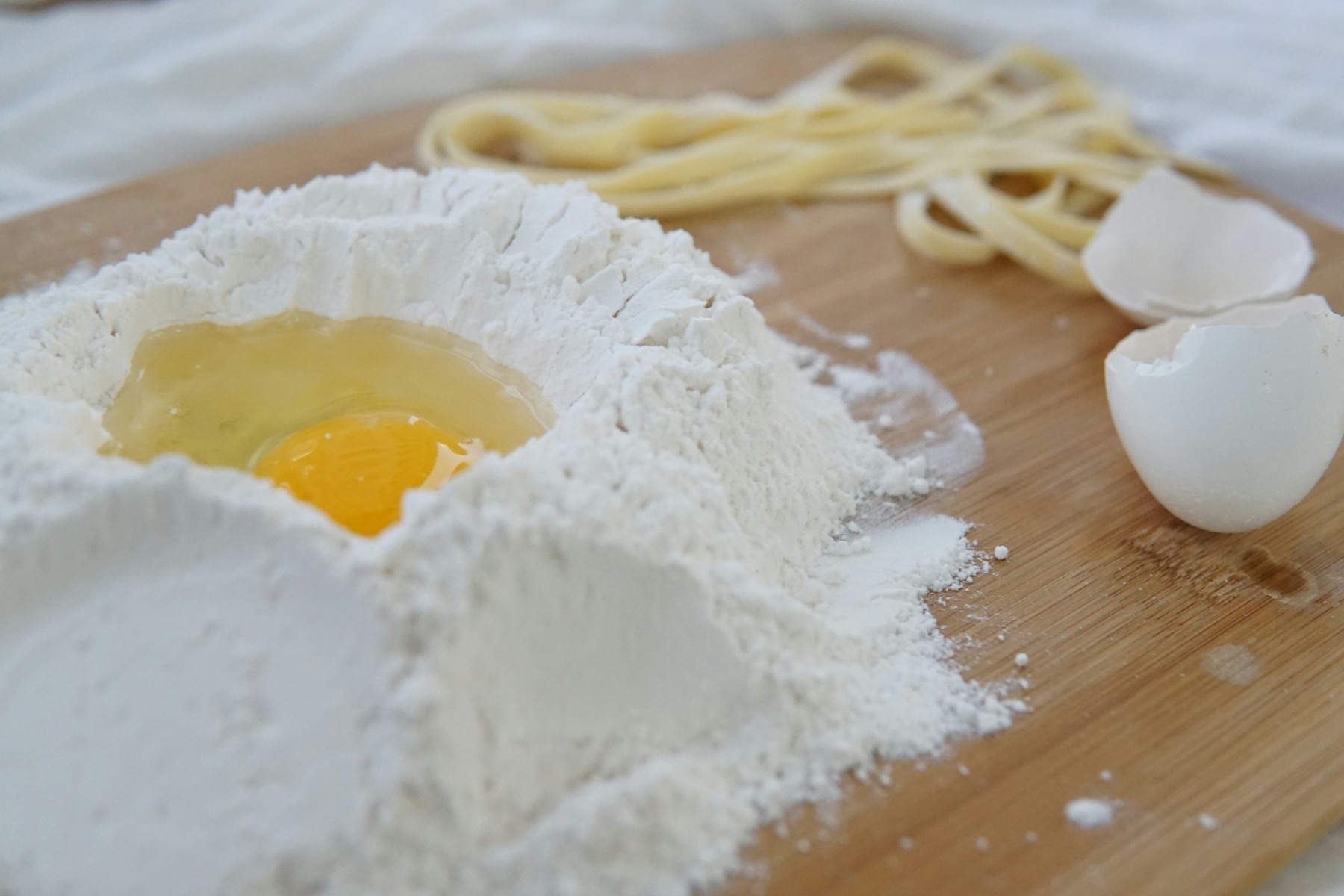
Keep the first evening simple. Choose one pasta shape, a familiar sauce and enough time to enjoy learning something new.
Make a little room.
Clear your counter, set out your ingredients and prepare a place for the pasta after it is cut. A clean tray with a light dusting of flour gives the strands somewhere to rest while you finish the next sheet.
Start with a dough recipe you trust.
Use the pasta dough recipe in your attachment instructions, or another reliable recipe suited to rolling. Follow its kneading and resting steps. Flour and eggs vary, so the feel of the dough matters as much as the measurements.
If the dough is sticky, tears readily or will not hold together, pause and adjust it according to your recipe before continuing. A machine cannot make up for dough that is not ready.
Get to know the roller.
Check that your mixer is compatible. Switch it off and unplug it before fitting or changing attachments. Follow the supplied instructions for securing the attachment and selecting the mixer speed.
Begin at the widest roller setting. Work with a small, flattened piece of dough that fits the roller, then reduce the thickness gradually as directed. Support the sheet as it comes through; let the roller do the feeding.
Choose your shape.
Keep sheets for lasagna or filled pasta, or use the fettuccine or spaghetti cutter. Let your recipe guide the sheet thickness and any drying time before cutting. Separate the strands gently and keep them from sticking together.
Bring it to the table.
Have your sauce ready before cooking. Fresh pasta cooks differently from dried pasta, so follow your recipe and taste for the texture you enjoy. Serve, pass the plates, and leave yourself time to sit down with everyone else.
The first batch is a beginning. Notice what worked, make one small adjustment next time, and let the evening become your own.