
Dough sticks to the roller.
A tacky surface needs attention before the next pass. Lightly dust the dough and work surface, then try a small, flattened piece. Add flour gradually: a heavy coating can leave the dough dry and difficult to handle.
Sheets crack or tear.
Look at the surface before changing the machine. Dry edges can crack; soft, sticky patches can catch and tear. Keep unused dough covered, work with manageable portions and reduce thickness gradually from the widest opening. Follow your recipe when adjusting the dough itself.
Do not assume another pasta machine’s dial numbers match your NEVKU roller. Use the instructions supplied with your NS-1881 set for the setting sequence.
Dough keeps shrinking back.
Give the dough more time to rest, covered, as your recipe directs. Roll a small test piece again before continuing with the whole batch.
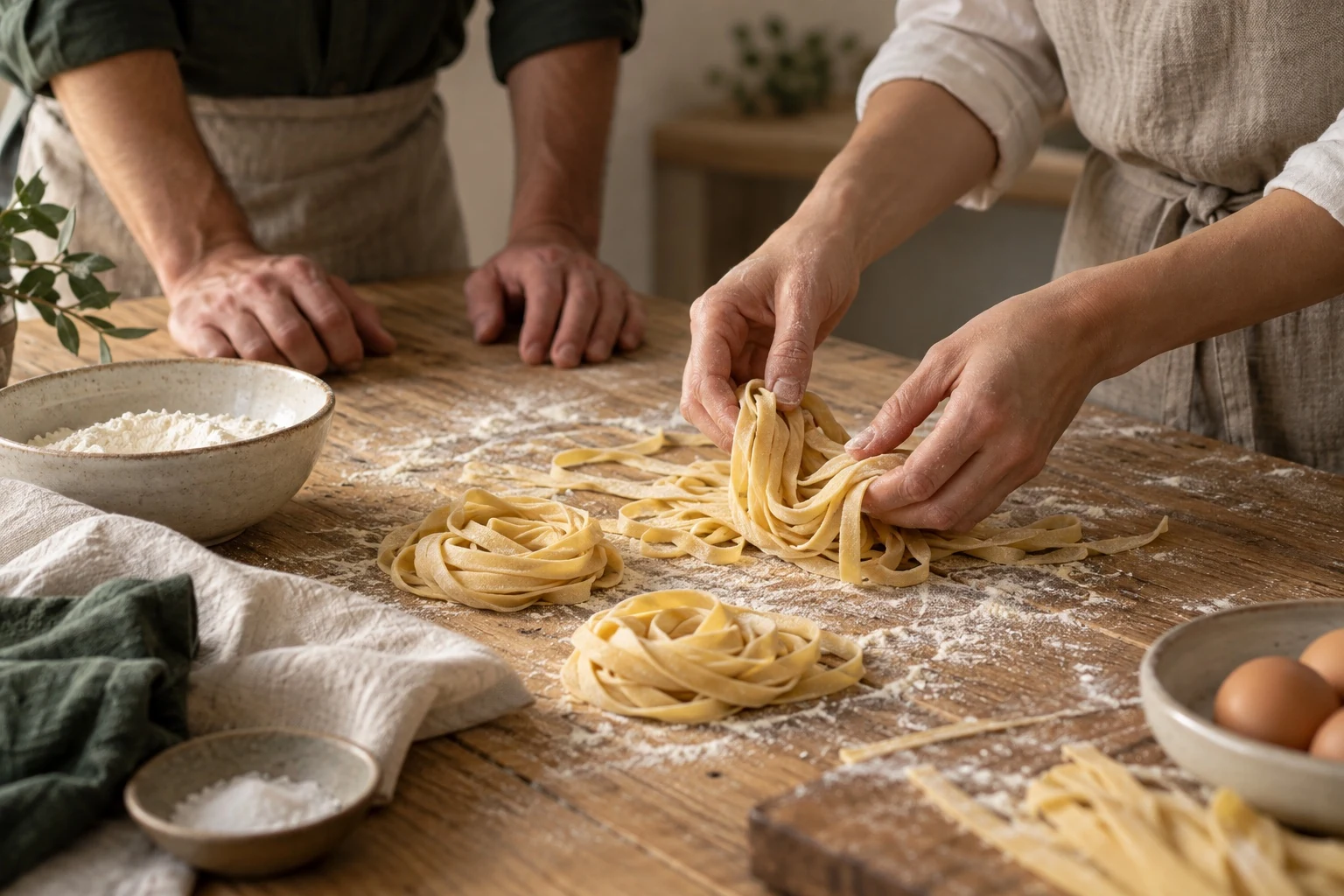
The strands do not separate cleanly.
Check whether the sheet feels tacky and whether its thickness suits your cutter’s instructions. A sticky sheet can cling together after cutting. Lightly flour the sheet if needed, support it without pulling, and test one short section before cutting the rest.
Use the fettuccine cutter for ribbons or the spaghetti cutter for fine strands. The roller makes sheets; it does not cut noodles. See the pasta shapes guide for each attachment’s role.
When to stop and check the equipment.
If an attachment jams, slips or makes an unusual noise, switch off and unplug the mixer. Keep fingers and tools out of the openings. Check the supplied instructions before handling or changing the attachment.
For the NEVKU NS-1881, remove dry dough residue with the cleaning brush and wipe the exterior with a dry cloth. Do not immerse the attachment or put it in a dishwasher. Read the dry-cleaning guide.
If the problem persists, use support through your Amazon order. Include the attachment name, mixer model and a description of what happened. Dough advice cannot confirm that an attachment is correctly fitted or undamaged.