
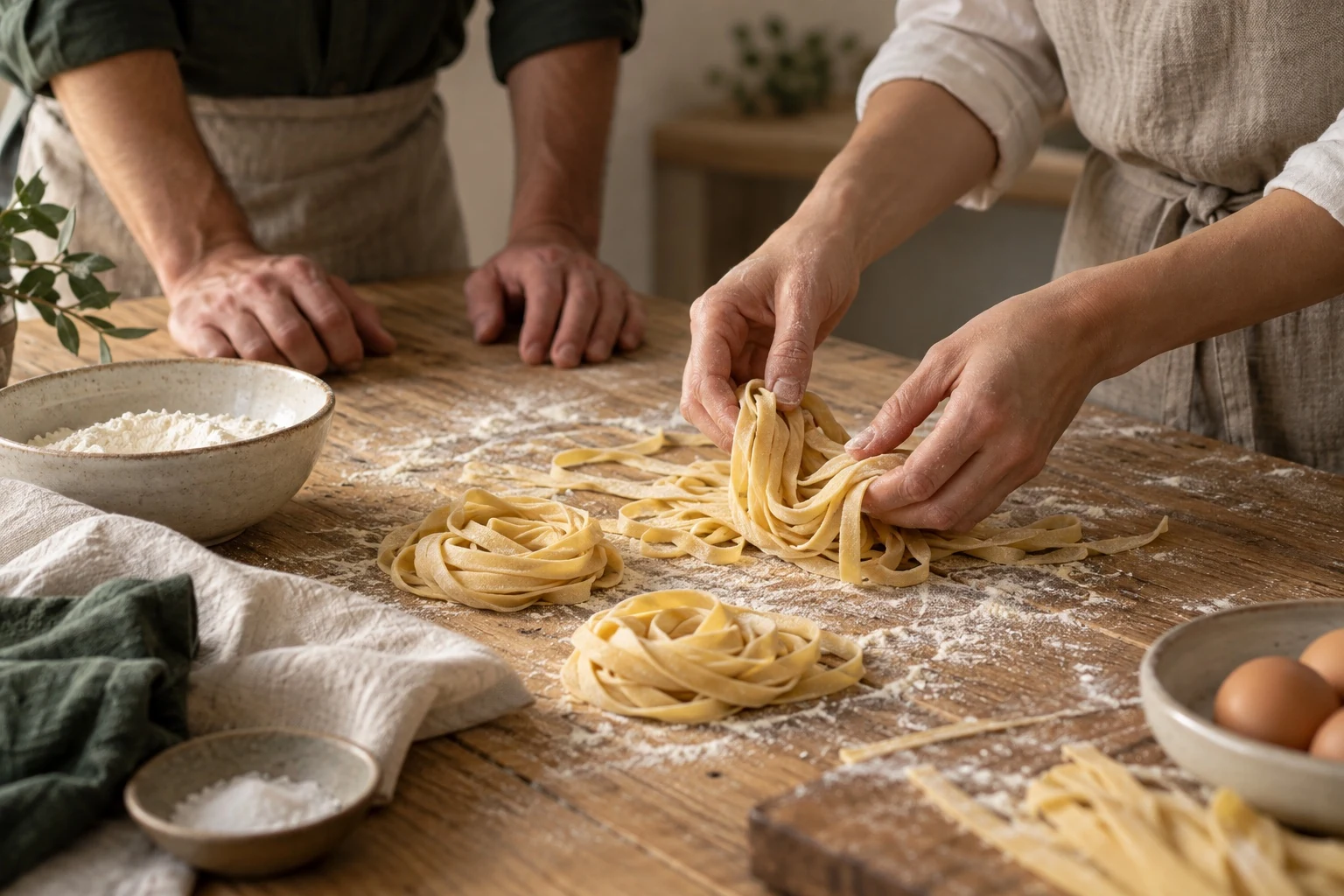
The same beginning can lead to a very different plate. Choose the shape that suits the meal you want to make.
Sheets: leave room for possibility.
The sheet roller is the starting point for all three attachments. Rolled sheets can be used for layered pasta dishes or cut and filled by hand. Choose the thickness your recipe calls for.
Fettuccine: wide, familiar ribbons.
The fettuccine cutter makes flat ribbons from prepared sheets. Try them with a sauce you already enjoy; the generous surface makes the shape a satisfying place to start.
Spaghetti: fine strands to gather.
The spaghetti cutter turns prepared sheets into fine strands. Separate them gently after cutting and keep them lightly floured as your recipe directs.
Let the dough guide you.
Sheet thickness, dough moisture and resting time all affect how pasta cuts. If strands stick together, pause and check the dough and sheet preparation against your recipe and attachment instructions.
Keep the shape simple for your first batch. There is plenty of time to explore on the next evening.
Can the roller make lasagna sheets and ravioli?
Yes—the roller makes the sheets. Trim them for lasagna, or fill and shape them by hand for ravioli. The set does not automatically fill, seal or form ravioli.
What about penne or macaroni?
This set rolls sheets and cuts strands. It does not extrude dough through shaped dies to make tubes. Read the difference between rollers, cutters and extruders before choosing your equipment.